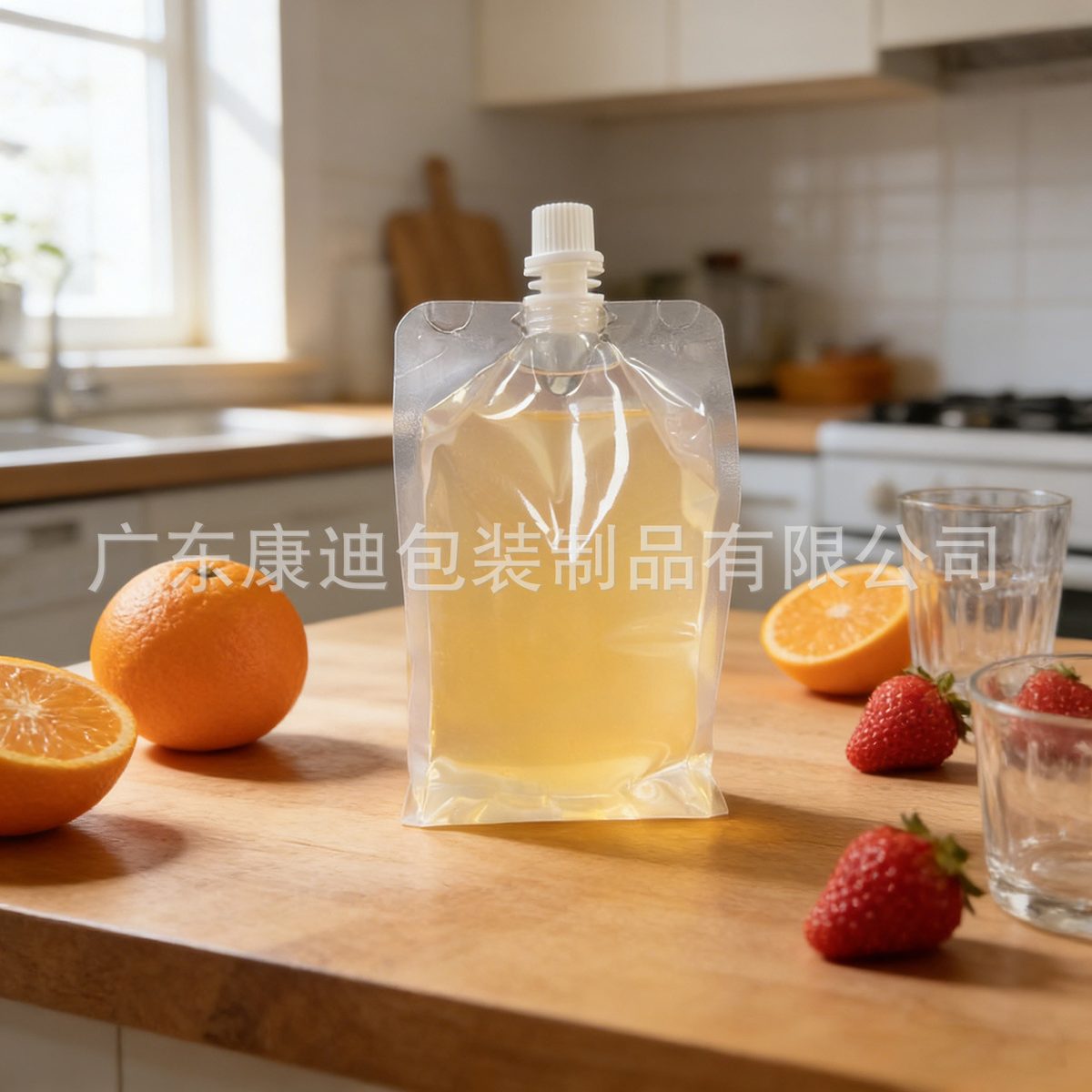
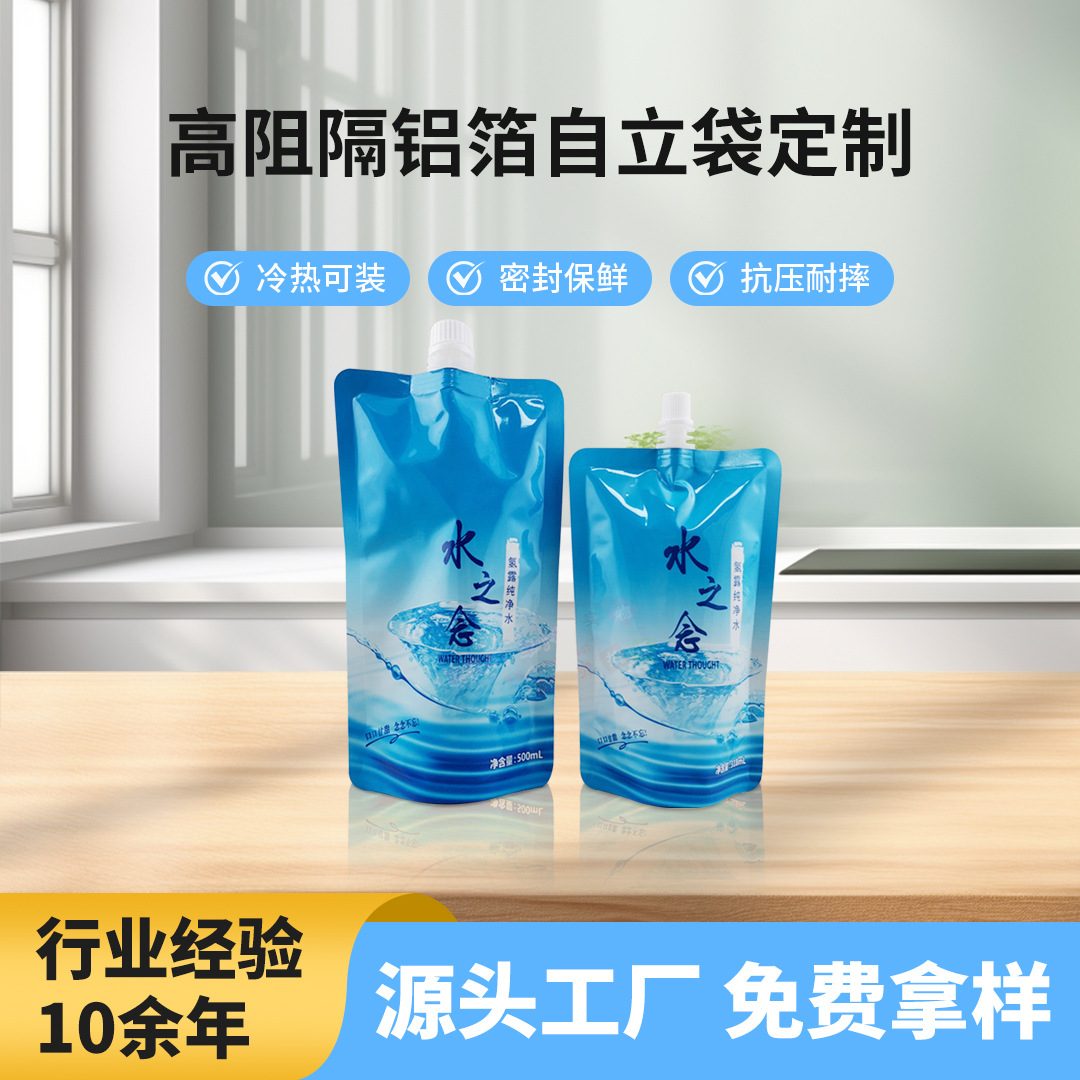
This foil pouch is engineered for mineral water in German and EU filling environments. The standard laminate is PET/AL/PE, combining a printable PET face, aluminium foil barrier and food-contact grade PE sealing layer; PE thickness and spout weld geometry are set to the filler. The pouch can be supplied with a center or offset spout, suitable for automatic fill-seal lines, and the flat or stand-up base is specified after filling trials. For PPWR-aligned projects, we review mono-PE or PP-rich recyclable-ready alternatives where shelf-life and line fit allow. Film is food-contact grade; final compliance documentation is confirmed against the ordered structure and intended use.
Printing uses 10-colour rotogravure, so brand graphics, batch coding zones and German-language filling information can be handled in one production stream. Artwork is checked for spout clearance, seal areas and print distortion before cylinders are approved. Typical MOQ is 10,000 pouches per design and structure, with lower trial quantities considered for filling-line qualification. Pre-production samples allow spout fit, drop and seal checks before mass production; production lead time is normally 20–30 working days after artwork and sample approval. For mineral water, we recommend a matte or gloss PET outer face and a clearly marked spout direction to support efficient automatic filling.
For EU buyers working toward PPWR and recyclability targets, the discussion should start with the application: mineral water is a low-oxygen-sensitivity product, so a recyclable-ready mono-PE structure may be evaluated where the required shelf life and spout performance allow. If foil barrier is retained, we keep the laminate specification transparent and avoid recyclability claims that the structure cannot support. Filling-line fit is confirmed through spout diameter, weld flange, pouch stiffness and case packing. Kody produces in a 15,000 m2 clean workshop with 10-colour rotogravure, spout pouch and roll film capability; orders are made-to-order, and compliance documents are matched to the final food-contact structure.